
How failure demand quietly overwhelms organisations

Failure demand is demand created because the organisation failed to do something correctly, clearly or completely the first time. It consumes capacity that could have been used to create value and can overwhelm teams while making the organisation appear productively busy.
At a glance
- —Failure demand is work caused by an earlier failure to meet a customer or organisational need.
- —Examples include repeat contact, corrections, escalations, rework and avoidable support activity.
- —Failure demand consumes capacity while adding little or no new value.
- —High activity can hide the fact that teams are repeatedly repairing the same systemic problems.
- —Reducing failure demand requires fixing the conditions that generate it, not simply processing it faster.
Most organisations think they have a capacity problem.
There is too much coming in, not enough time to deal with it, and too many people already stretched thin. The instinctive response is to ask for more headcount, tighten priorities, or push for greater efficiency. Sometimes that helps. Very often, though, the real problem is not simply the volume of work. It is the amount of work the organisation has quietly created for itself.
That is what makes failure demand so destructive. It rarely arrives announced. Instead, it builds in the background, disguised as normal business activity, until teams become so busy dealing with the consequences of earlier problems that they have less and less room to do the work that would actually move things forward.
Failure demand is the work created by a failure to do something right the first time, or by a system that makes confusion, delay, and rework more likely than they should be. It shows up in all the work that should not have been necessary: extra calls, escalations, chasing, rework, workarounds, repeated clarification, and decisions that have to be revisited because the original conditions were never strong enough to support a clean outcome.
Every organisation has some of it. The trouble starts when it becomes normal.
At that point, teams can be working flat out without making much real progress. A service team becomes overloaded not only because demand is high, but because poor quality upstream is driving extra contact. Product and engineering teams spend time revisiting decisions that should have been settled earlier. Operational teams chase missing information, correct avoidable errors, and step in to manage the fallout from delays that have already rippled through the system. From the inside, it feels like relentless pressure. From the outside, it can still look like business as usual.
That is why failure demand is so often missed. It hides inside activity.
Leaders see people busy and assume the organisation is carrying a heavy but necessary workload. Teams feel overwhelmed and conclude that the only answer is more capacity. In reality, a meaningful share of what the organisation is dealing with may never have needed to exist at all. It is work generated by poor flow, weak handovers, unclear ownership, avoidable defects, fragmented decision-making, or operating conditions that make clean execution much harder than it should be.
Once failure demand starts to build, it creates its own momentum. The more time people spend reacting, correcting, and chasing, the less time they have to improve the causes of those problems. That makes further failures more likely, which creates yet more demand on the same people. Before long, the organisation can find itself trapped in a pattern where capacity is consumed not by progress, but by the cost of its own incoherence.
This is one reason apparently busy organisations can still feel strangely unproductive. The effort is real enough, but too much of it is being spent on recovery rather than value creation.
It also explains why some teams never seem to get ahead, no matter how hard they work. The issue is not laziness, weak intent, or even poor prioritisation in the narrow sense. It is that the system keeps generating fresh work faster than the organisation can resolve the conditions causing it. What looks like overload is often partly self-inflicted.
That distinction matters, because it changes what leaders should look for.
If a team is overwhelmed, the immediate question should not just be how much work is coming in. It should also be how much of that work exists because something elsewhere is going wrong. Are customers making repeat contact because the service was unclear or incomplete the first time? Are teams revisiting work because decisions were made without enough context, ownership, or coordination? Are delays creating extra handling, communication, and internal noise that nobody originally planned for? Is poor quality upstream quietly consuming capacity downstream?
Those are the questions that bring failure demand into view.
And once it becomes visible, the organisation starts to see itself differently. What looked like a straightforward resourcing problem may turn out to be something else entirely — a problem in flow, quality, ownership, or operating design. In some cases, the fastest way to create capacity is not to add more people at all, but to reduce the amount of avoidable work the system is generating.
That is often where the real leverage sits.
An organisation that reduces failure demand does not just get more efficient. The result is usually a calmer system in which work is easier to understand, service becomes more predictable, and people have more room to use judgment well instead of constantly reacting to breakdowns. Customer experience usually improves too, because customers stop feeling the friction that failure demand creates on both sides of the relationship.
This is why failure demand deserves much more attention than it usually gets. It is not a minor operational nuisance. It is one of the most reliable signs that the system is working against itself.
If your teams are permanently busy, if service feels noisy, if rework is rising, or if people spend too much of their time dealing with problems that should never have reached them in the first place, there is a good chance failure demand is quietly overwhelming the organisation.
The first step is not to work harder. It is to see it.
How Adaptavis helps
We help organisations uncover the demand their systems are creating for themselves. By making flow, ownership, quality issues, and operating conditions more visible, we help reduce the avoidable work that quietly consumes capacity and keeps teams stuck in reactive patterns.
How much capacity is being consumed by avoidable demand?
Adaptavis helps leaders examine where rework, repeat contact, escalation and preventable operational activity are consuming capacity, and which system conditions are continually recreating that demand.
Book a Business Performance Clarity CallIn this series
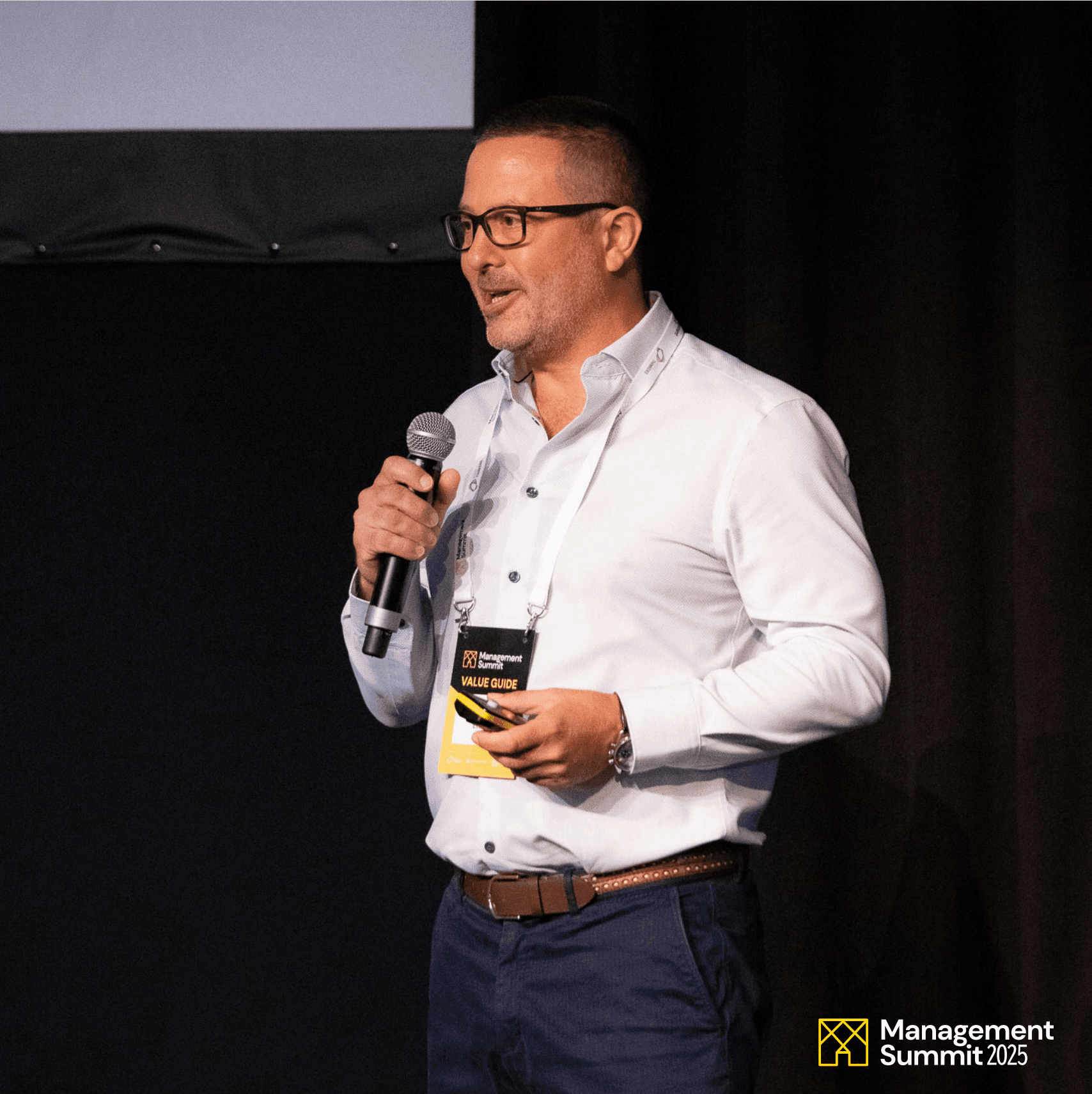
James Enock
Founder, Adaptavis
Over the past 25 years James has helped organisations across financial services, technology, retail and eMobility rethink how they operate; creating clarity, alignment and ways of working that deliver lasting results. He has led transformations with organisations including Barclays Investment Bank, Capital One, Sainsbury's, Shell Recharge Solutions and Ernst & Young. His work sits at the intersection of strategy and execution: turning the bigger picture into results on the ground.